 GameRift
Star Wars: Galactic Racer Review Opens on a Burnout Lesson About Feel Over Physics
Reviews·October 3, 2026
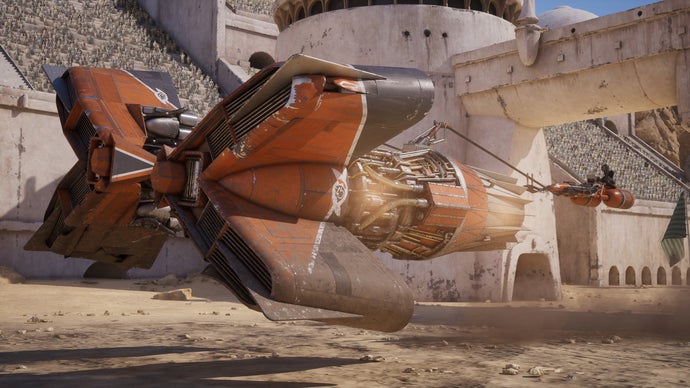
Star Wars: Galactic Racer has landed, and the review that kicks off our coverage begins somewhere you might not expect: with Burnout.
The reviewer recalls a conversation from a few years back with Alex Ward, co-founder of Criterion Games, about the driving model behind the Burnout series. A friend had told them that beneath the arcade immediacy sat physics of unusual nuance and beauty. They went into the interview reverent and a little confused about terminology, unsure whether they were asking about a driving model, a handling model or a physics model.
Ward would have none of it. He explained that in the very earliest Burnout games, the cars did not actually have wheels. Whatever made those games feel so good, it was not a faithful simulation of rolling tires on tarmac.
It is a neat way into a racing game review, and it says a lot about what the reviewer is looking for. Arcade racers live or die on feel, and feel is often built from clever illusions rather than realism. Burnout's sense of weight, speed and danger came from design decisions about how a car should behave, not from modelling every component of a real vehicle.
That lens matters for a Star Wars racer in particular. Podracing and high-speed starship runs have never been about believable engineering. They are about fantasy, velocity and the thrill of nearly losing control. Any game in this space has to decide how much to simulate and how much to fake, and the best ones make that choice invisible.
The full verdict on how Galactic Racer handles that balance is in the complete review. The opening anecdote, though, sets the standard clearly: the question is not whether the physics are accurate, but whether the game makes you believe in the speed.
Reporting based on an external source.