 GameRift
Revisiting Ecstatica, the Horror Game Whose Fancy Graphics Got Carried Away
Retro Gaming·October 28, 2026
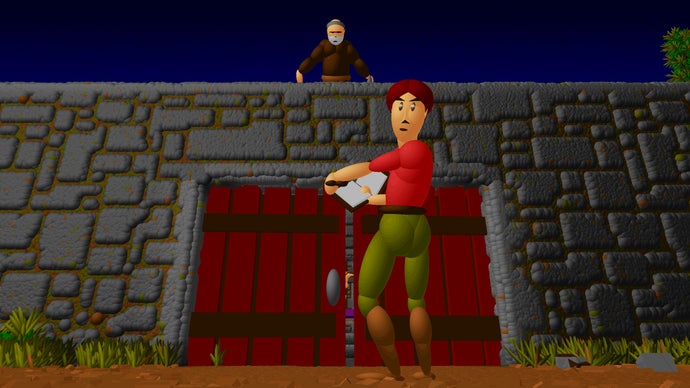
Games writers have a half-joking name for a familiar pattern: time-to-penis. Hand players a shiny new set of customization tools and sooner or later someone will produce an anatomical creation nobody asked for. Ecstatica, the mid-1990s survival horror from developer Andrew Strong's Perfect Entertainment, suggests the same impulse works in reverse. Developers who get giddy over a new graphics toy can't always resist testing it on everything in sight.
The game's selling point was its rendering approach. Instead of building characters and environments from flat polygons, Strong's engine described them with ellipsoids, giving the whole world a soft, rounded, organic look. At a time when most 3D games still looked boxy and angular, that aesthetic stood out. It also suited a gothic horror setting full of twisted creatures and shadowy spaces, where the unusual shapes made ordinary scenery feel slightly wrong.
The survival horror label fit as well. Ecstatica arrived before the genre's conventions had settled, and its exploration and puzzle-driven design leaned on atmosphere more than on action. Players wandered a dark world looking for a way out, and the engine's rounded forms did a lot of the unsettling work.
The catch is that the same flexibility that made the visuals so distinctive also gave the team a very capable sculpting tool. Once a system can render fine, soft detail, it becomes tempting to spend that detail on things that have no business being there, and Ecstatica became a textbook case. Today the game is remembered as much for its more eyebrow-raising details as for its technical ambition, which is a little unfair to a title that was genuinely trying something new.
Revisiting it now is worthwhile for that reason. Early 3D experiments offer a useful lesson in both creative risk and creative restraint. Ecstatica's legacy is a reminder that the moments players remember most are not always the ones a design team planned.
Reporting based on an external source.